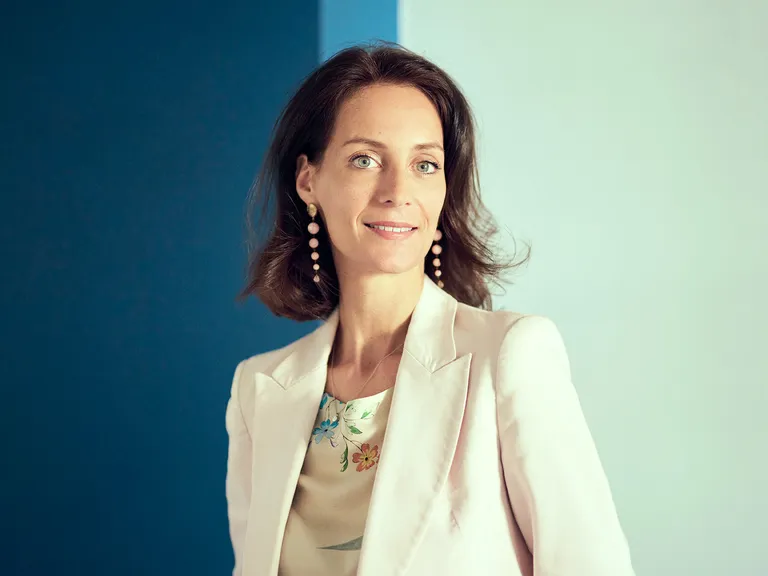
Do women give more often than men, Habiba Alami?
Fifteen years in finance, a six-figure salary - and no budget of her own. Then Habiba Alami, going through a divorce and raising a newborn baby, left her corporate job to found Happy Pot: A Swiss platform where people collect money together online, whether for a birthday gift, a farewell or someone in need. Today she pays herself CHF 0, has reached break-even without outside investors, and knows exactly who organises the office collection. Spoiler: mostly women.
- Age: 35
- Occupation: Founder & CEO of Happy Pot
- Income: I went from a well-paid six-figure corporate salary to CHF 0 in salary from Happy Pot. Quite a career move, right? For now, we're putting the money back into growing the business.
- Biggest monthly expense: My rent. Living in Zurich is not cheap!
Habiba, you swapped a six-figure corporate salary for a salary of zero francs. Be honest: are you crazy?
Quite a career move, right? I went from a well-paid corporate salary to CHF 0 from our startup Happy Pot. For now, we're putting the money back into growing the business. And the funny thing is: I took the biggest risk of my life exactly when I had the most to lose.
That sounds like a contradiction.
It is! When I was single, with no kids and hardly any responsibilities, I would never have dared to leave my comfortable corporate job. I loved my financial security far too much. Then, a few years later, I'm going through a divorce, raising a newborn baby, and that's when I decide to leave my corporate job to build Happy Pot. The timing couldn't have been more challenging, but I had 15 years of experience in finance, a clear vision and the determination to make it happen. Looking back, what surprises me most is that when I had very little to lose, I played it safe. And when I had everything to lose, I finally found the courage to take the risk.
Habiba Alami
As a founder myself, I have to ask: when will it pay off? Can you live off Happy Pot one day?
My personal finances allow me to live without a salary until spring 2027. I’ve personally invested around CHF 200,000, or slightly more, in Happy Pot so far. But the start-up is growing. We reached break-even quite quickly, without outside investors, and we've already helped people collect millions of francs. We've shown there's real demand for what we do in Switzerland. Now the goal is to grow much bigger, expand internationally and turn Happy Pot into a household name. And hopefully, all that hard work will pay off for me too!
You spent over fifteen years in finance. I'd assume your own money was in perfect order.
You'd think so! That's the funny part. I knew a lot about finance professionally, but I didn't always apply that knowledge to my personal life. I didn't pay much attention to budgeting or tracking my expenses. As long as there was money in my account, I didn't worry too much.
Who talked to you about money at home?
No one! We didn't talk much about personal finance at home, and I wasn't taught how to manage my own money at school either.
So what was your wake-up call?
Netflix, believe it or not. I watched “How to Get Rich” with Ramit Sethi, and it really opened my eyes. What shocked me was seeing people who earned really good money and still ended up on the edge of bankruptcy, simply because they weren't managing it properly. Of course I knew all about budgeting, saving and investing. I'd just never applied any of it to my own finances.
You have a daughter. What do you want her to understand sooner than you did?
That earning money and knowing how to manage it are two completely different things. I wish I'd understood that much earlier. And I definitely don't want my daughter to learn it as late as I did.
And today? Budget tracker or gut feeling?
Honestly? Still gut feeling.
What does money mean to you now?
Peace of mind, definitely. And the freedom to say no. No to a job you hate, or to staying in a relationship just because you can't afford to leave. But it's also the little things: choosing the flight that fits your schedule instead of the cheapest one, or going shopping without worrying about the bill.
Habiba Alami
Money as a relationship saver?
In a way, yes. I think money can avoid a lot of arguments, in relationships and in friendships. Sometimes the fight isn't really about the holiday or the restaurant. It's about the financial pressure behind it. Having enough money simply means having fewer things to worry about.
Do you talk about money with other women?
Yes, but we talk much more about spending money than about managing it. We can easily discuss what we spend on holidays, restaurants, shopping or childcare. But our salaries, how much we save or where we invest? Rarely. And I think that's a shame, because we could learn so much from each other and make better financial decisions.
That's the money taboo we keep running into at ellexx. So let's break it: how do you invest?
Right now, my biggest investment is definitely Happy Pot. I've chosen to put most of my available resources into building the company rather than investing in the stock market. And it's quite different from buying shares. You're not just putting in money, you're putting in your time, your energy and a lot of work. Of course it's risky. But there's something exciting about investing in a business you're building yourself and watching it grow.
What does it really cost to start a business?
Time, above all. The funny thing is, you start your own business thinking you'll have more freedom, and you end up thinking about it 24/7! And then there's the money, of course. Launching the platform was just the beginning. Then you have to keep investing in technology, marketing, compliance, hiring people … the list goes on. The tricky part is deciding where to invest, because you can't do everything at once. Sometimes you have to spend money today on something that might only pay off months or years later. That's one of the biggest things I've learned as a founder.
How does Happy Pot actually make money?
Through volume. People collect money on Happy Pot, and we earn a small percentage on each collection. When thousands of people use it, those small amounts add up. We charge 4.5% on bank payouts, which also covers payment processing, compliance, technology and customer support. We're also offering very soon a free gift card option, where organisers pay no commission at all and we earn a commission from the retail partners instead.
And who came up with the 4.5%?
Our first customers, actually! When we were testing the first version of Happy Pot, a small group of users gave us regular feedback. We became so close to them that they were almost part of the team. When it was time to launch, they helped us decide what a fair price would be, and they tested the platform with us. I love that our pricing wasn't decided in a meeting room or copied from competitors. It came from the people who were going to use Happy Pot and pay for it.
Habiba Alami
You sit on a goldmine of data about how people give. So tell me: do women give more?
Women contribute more often, but men tend to give larger amounts. Around 61% of the contributions on Happy Pot are associated with women. But the average contribution is CHF 74 for men, compared to CHF 60 for women. I wonder if the gender pay gap could partly explain this difference.
And who organises the collections?
That's what I find most interesting. Around 63% of our identifiable pot organisers are women. For births and baptisms, it's over 70%.
The mental load, in black and white.
Exactly. Think about it: someone has to remember the birthday, organise the gift, collect the money and get everyone to sign the digital card. We often talk about who pays, but not about who makes everything happen.
Any other differences between women and men?
Women contribute proportionally more to solidarity campaigns, while men are more represented in farewell and retirement collections. Women are also slightly more likely to leave a personal message. I find it fascinating how these little differences show up in something as simple as collecting money together.
You call yourself generous. Do you donate?
Yes, I do. And I've always preferred giving directly to people who need help. Before moving to Switzerland, I used to help people I could see struggling around me. In Switzerland, I found it harder to identify people who needed help. Not because poverty doesn't exist, but because financial difficulties are often less visible. Charities do amazing work, but personally, I like knowing who I'm helping and seeing the difference my contribution makes.
Has Happy Pot changed that?
Completely. After launching, I realised how wrong I'd been. We started receiving messages from people in Switzerland who really needed financial help, but many were afraid to share their stories publicly. They didn't want their family, friends or colleagues to find out. That really stayed with me. Just because you don't see people struggling doesn't mean they aren't. Today, thanks to Happy Pot, anyone can create a fundraising pot, even without being part of a charity or an association. Those who feel comfortable sharing their story publicly can post their fundraising link on social media and reach people willing to help, including complete strangers. That's what I love about Happy Pot: giving ordinary people a simple way to ask for help and making it easier for others to support them directly.
Making the invisible visible - in money and in care work. Thank you for the conversation, Habiba!