'%3e%3cpath%20d='M29.3373%2096.1258C16.4488%2096.1258%206.86376%2083.4535%206.86376%2067.6711V67.0051H47.5157V65.3385C47.5157%2050.7767%2039.2539%2041.1089%2027.5751%2041.1089C13.8054%2041.1089%203.11816%2054.7818%203.11816%2070.6757C3.11816%2084.457%2011.1589%2099.5734%2027.4645%2099.5734C40.1321%2099.5734%2047.7338%2090.3487%2051.2583%2078.7884H49.6066C44.8693%2090.3487%2038.0382%2096.1288%2029.3373%2096.1288V96.1258ZM27.133%2044.5535C37.0466%2044.5535%2042.7755%2052.2232%2042.7755%2063.672H7.41335C8.9546%2053.0007%2016.6668%2044.5535%2027.133%2044.5535Z'%20fill='black'/%3e%3cpath%20d='M60.0131%209.42966H55.6074V98.3498H60.0131V9.42966Z'%20fill='black'/%3e%3cpath%20d='M77.7944%209.42966H73.3887V98.3498H77.7944V9.42966Z'%20fill='black'/%3e%3cpath%20d='M111.394%2096.1258C98.5054%2096.1258%2088.9204%2083.4535%2088.9204%2067.6711V67.0051H129.572V65.3385C129.572%2050.7767%20121.311%2041.1089%20109.632%2041.1089C95.862%2041.1089%2085.1748%2054.7818%2085.1748%2070.6757C85.1748%2084.457%2093.2156%2099.5734%20109.521%2099.5734C122.189%2099.5734%20129.79%2090.3487%20133.315%2078.7884H131.663C126.926%2090.3487%20120.095%2096.1288%20111.394%2096.1288V96.1258ZM109.19%2044.5535C119.103%2044.5535%20124.832%2052.2232%20124.832%2063.672H89.47C91.0112%2053.0007%2098.7235%2044.5535%20109.19%2044.5535Z'%20fill='black'/%3e%3cpath%20d='M176.004%2042.7725H172.811L157.939%2066.4475L142.076%2042.7725H136.126L154.522%2070.3381L135.684%2098.3468H138.769L156.284%2072.8937L173.692%2098.3468H179.639L159.591%2069.0061L176.004%2042.7725Z'%20fill='black'/%3e%3cpath%20d='M208.831%2069.0061L225.247%2042.7725H222.051L207.179%2066.4475L191.315%2042.7725H185.368L203.765%2070.3381L184.926%2098.3468H188.012L205.527%2072.8937L222.932%2098.3468H228.882L208.831%2069.0061Z'%20fill='black'/%3e%3c/g%3e%3cdefs%3e%3cclipPath%20id='clip0_35_103'%3e%3crect%20width='232'%20height='109'%20fill='white'/%3e%3c/clipPath%3e%3c/defs%3e%3c/svg%3e)
Freecycling is the new Recycling
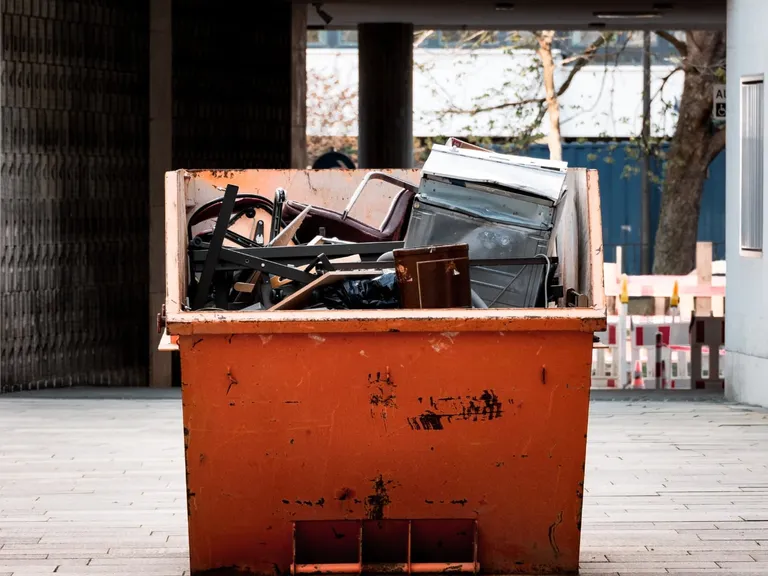
I recently moved from a broom closet into a real office. You know, the kind people imagine today: lots of glass, light, and concrete. Sofas, coffee bars, no overcrowding. Naturally, the old furniture didn’t fit anymore. So what happened to it?
As is often the case with office moves, a lot of used furniture ends up in the trash — even though much of it could still be useful to others. Charities, associations, NGOs, homeless shelters. But companies would rather pay to dispose of inventory than give it away. Even online retailers like Amazon & Co. burn brand-new products because it’s cheaper than donating them.
Like eBay — but everything is free
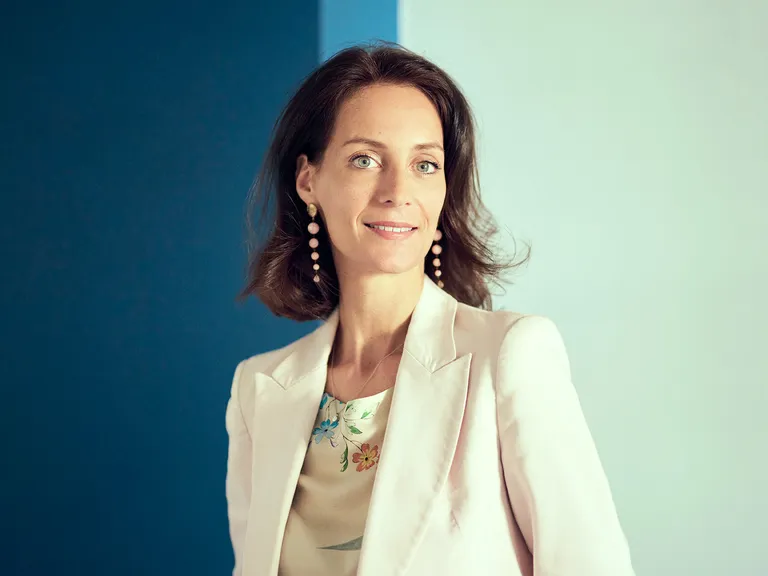
This economic absurdity kept bothering British banker May Al-Karooni. In 2013, she asked herself: Why do we have Airbnb and Uber, but nobody has built a platform for the waste economy? No sooner thought than done: Globechain was born.
You can think of the marketplace as a kind of eBay — except everything is free. The business model is simple. Large companies such as department store chains and hospitals pay a membership fee instead of disposal costs, and in return receive data that helps them prove they are operating sustainably. On the other side, charities and private individuals can collect the goods for free.
The circular economy is worth trillions
In just a few years, the idea has saved foundations 2.5 million Swiss francs, and five million kilos of supposed waste have been kept out of landfill. It’s called freecycling. The digital second-hand platform for businesses redirects unwanted goods to people who can build something new with them. Use products as long as possible, repair them, recycle them: that’s the circular economy.
For a long time, it was dismissed. Today, this sector is estimated to be worth five trillion Swiss francs.
Al-Karooni belongs to a growing group of social entrepreneurs — founders whose businesses are primarily designed to solve social problems. Unlike the traditional corporate world, women lead the way here. In 90 percent of these companies, the person at the very top is also a woman. Still, the British entrepreneur has always resisted being boxed into the “social impact” corner alone.
Big-money investors overlook women
Globechain’s profitability proves that the idea can also generate real money and should be attractive to investors. Yet for women, raising capital remains difficult. Data from PitchBook shows that global venture capitalists invest a mere 2.2 percent of their money in female founders. More than 90 percent of investors are men. They tend to back founders who resemble themselves. Investment bank Morgan Stanley estimates that these mega-investors are missing out on as much as four trillion Swiss francs by failing to invest more in women.
Globechain financed itself. Al-Karooni started with just 1,000 Swiss francs and worked for free. Today, the platform for everything the business world no longer wants operates in eleven countries and has won multiple awards.
After helping offices, shops, and restaurants find second-hand furnishings, Globechain now wants to save the fashion industry from landfill. Fashion is one of the dirtiest industries in the world, with excess inventory ending up in incinerators by the ton. Globechain has the potential to make one industry after another — and ultimately investors too — rethink waste entirely.