'%3e%3cpath%20d='M29.3373%2096.1258C16.4488%2096.1258%206.86376%2083.4535%206.86376%2067.6711V67.0051H47.5157V65.3385C47.5157%2050.7767%2039.2539%2041.1089%2027.5751%2041.1089C13.8054%2041.1089%203.11816%2054.7818%203.11816%2070.6757C3.11816%2084.457%2011.1589%2099.5734%2027.4645%2099.5734C40.1321%2099.5734%2047.7338%2090.3487%2051.2583%2078.7884H49.6066C44.8693%2090.3487%2038.0382%2096.1288%2029.3373%2096.1288V96.1258ZM27.133%2044.5535C37.0466%2044.5535%2042.7755%2052.2232%2042.7755%2063.672H7.41335C8.9546%2053.0007%2016.6668%2044.5535%2027.133%2044.5535Z'%20fill='black'/%3e%3cpath%20d='M60.0131%209.42966H55.6074V98.3498H60.0131V9.42966Z'%20fill='black'/%3e%3cpath%20d='M77.7944%209.42966H73.3887V98.3498H77.7944V9.42966Z'%20fill='black'/%3e%3cpath%20d='M111.394%2096.1258C98.5054%2096.1258%2088.9204%2083.4535%2088.9204%2067.6711V67.0051H129.572V65.3385C129.572%2050.7767%20121.311%2041.1089%20109.632%2041.1089C95.862%2041.1089%2085.1748%2054.7818%2085.1748%2070.6757C85.1748%2084.457%2093.2156%2099.5734%20109.521%2099.5734C122.189%2099.5734%20129.79%2090.3487%20133.315%2078.7884H131.663C126.926%2090.3487%20120.095%2096.1288%20111.394%2096.1288V96.1258ZM109.19%2044.5535C119.103%2044.5535%20124.832%2052.2232%20124.832%2063.672H89.47C91.0112%2053.0007%2098.7235%2044.5535%20109.19%2044.5535Z'%20fill='black'/%3e%3cpath%20d='M176.004%2042.7725H172.811L157.939%2066.4475L142.076%2042.7725H136.126L154.522%2070.3381L135.684%2098.3468H138.769L156.284%2072.8937L173.692%2098.3468H179.639L159.591%2069.0061L176.004%2042.7725Z'%20fill='black'/%3e%3cpath%20d='M208.831%2069.0061L225.247%2042.7725H222.051L207.179%2066.4475L191.315%2042.7725H185.368L203.765%2070.3381L184.926%2098.3468H188.012L205.527%2072.8937L222.932%2098.3468H228.882L208.831%2069.0061Z'%20fill='black'/%3e%3c/g%3e%3cdefs%3e%3cclipPath%20id='clip0_35_103'%3e%3crect%20width='232'%20height='109'%20fill='white'/%3e%3c/clipPath%3e%3c/defs%3e%3c/svg%3e)



Let yourself be shaken up!
Everything you didn't learn about finance at school is now available to you. In the Close the Gaps book, ellexx founders Patrizia Laeri and Nadine Jürgensen reveal the gender-specific financial gaps faced by women in nine chapters. An eye-opening book and, at the same time, a manifesto for change. Probably the most valuable guidebook – also ideal as a gift.
What to expect
Even girls receive less pocket money than boys of the same age in many countries. This financial gap tends to continue throughout a woman's life. It even widens because women are paid less, invest less, start fewer businesses, and buy fewer homes, because they become mothers and are therefore less able to make provisions for the future.
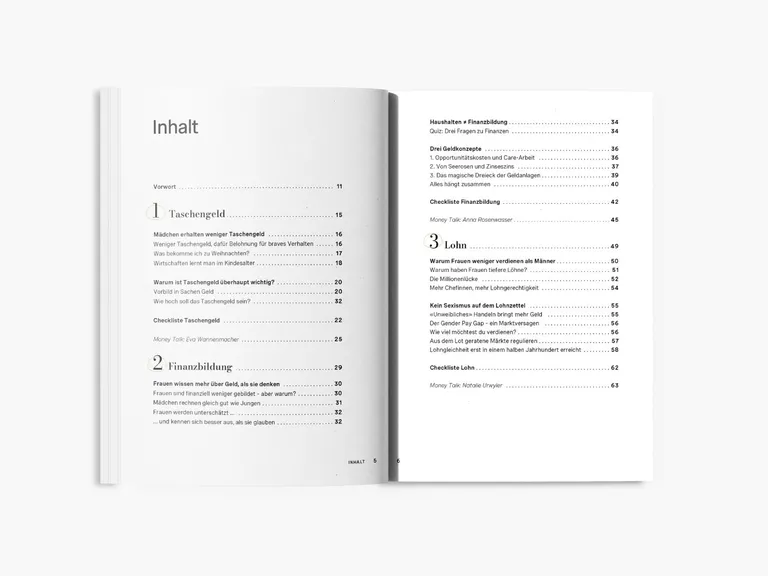
The Close the Gaps book reveals nine financial gaps affecting women in nine new chapters, explains them, and presents concrete solutions for closing them. Money Talks with women from different professions provide valuable insights into their individual approaches to money.
Chapter 1 – Pocket Money
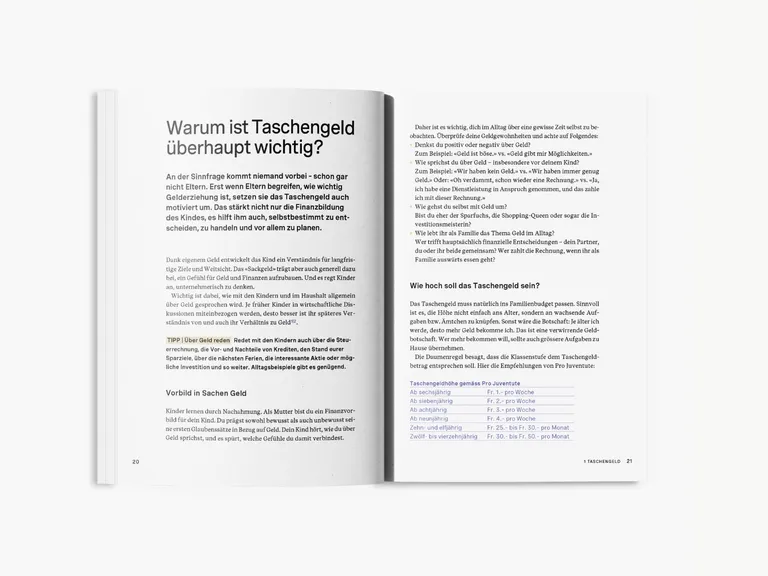
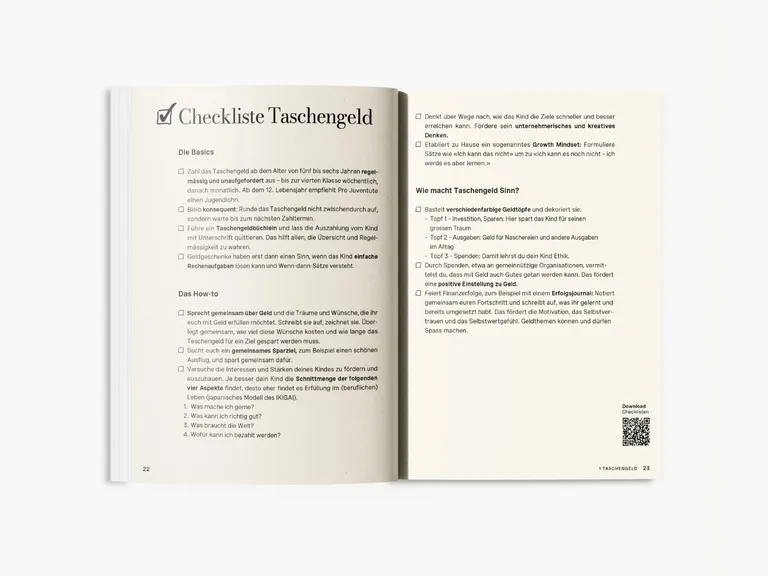
Gender pay inequality begins in childhood. Girls receive less pocket money than boys and are paid less for household chores. So are parents discriminating against their daughters? It's not that simple. Here you can find out how to give girls a confident start in their financial lives.
Chapter 2 – Financial education
Women have less confidence in their financial knowledge than men. This starts in childhood: girls are less financially literate, usually receive less pocket money than boys, and «learn» at school that girls are less good at math than boys. How does this (perceived) lack of knowledge affect women later in life, and what can we do about it?
Chapter 3 – Wages
When people enter the workforce, the financial gap between the sexes really starts to widen. Women around the world still earn significantly less than men and take on more unpaid work. This inequality has become even more pronounced during the coronavirus pandemic. The backlash has set women back, and they are still a long way from catching up. Even though the solution would be simple.
Chapter 4 – Investing
Only about a quarter of women are investors. All over the world, women invest less than men – and lose a lot of money as a result. This widens the existing wealth gap. In this chapter, you will learn how women are discouraged from investing from an early age by society and later by banks. You will also find out how you can become an investor yourself.
Chapter 5 – Founding
How do women obtain capital for their ideas and visions? You guessed it: it's extremely difficult. The world of start-ups is one-sided and unequal. Women receive up to 99 percent less capital than men when starting a business. This is absurd, because women have been proven to be more successful in business than their male colleagues. Here you can read how you can still raise money for your idea.
Chapter 6 – Partnership
Money and love – relationships are also a financial matter. Financial fairness in relationships is important because women earn less than men throughout their lives. One reason for this is the motherhood penalty: when women have children, their income drops. This is due to the tax system, childcare costs, the division of childcare and paid work in your partnership – and the marital status you choose as a couple.
Chapter 7 – Property
«Why are women poor?» asked Virginia Woolf, the pioneer of the global women's movement, over 100 years ago. In her world-famous essay «A Room of One's Own», she wrote that a woman needs money and a room of her own. In fact, women are still much poorer than men today, mainly because they own less space and land. From gold to land: equality also has to do with material assets.
Chapter 8 – Precautionary measures
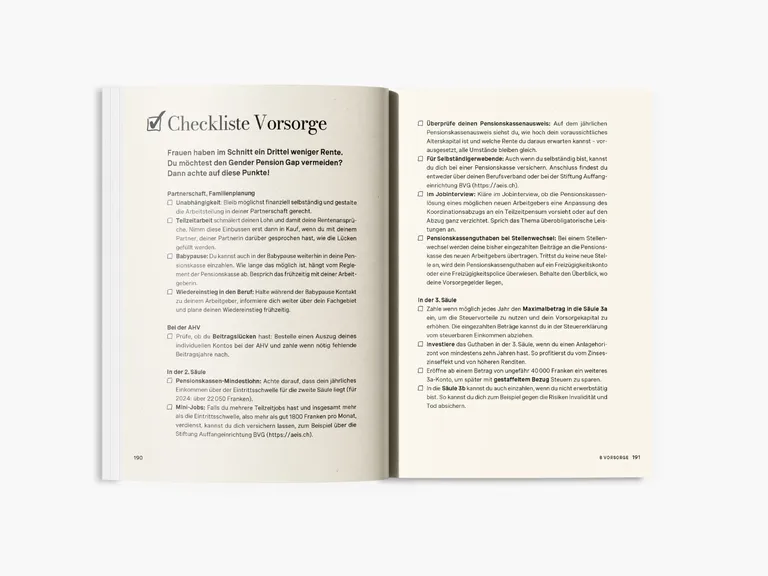
Retirement seems a long way off. One thing is clear: as a woman, you will receive around 30 percent less pension than men. Poverty in old age is female. The gender pension gap has to do with your career. What's more, the Swiss pension system is not designed for women. Here you can read about how you can better provide for yourself so that you don't end up in serious financial difficulties in old age.
Chapter 9 – Assets
Women worldwide have less wealth than men. There are many reasons for this, as the previous chapters show: women earn and invest less and are therefore less able to build wealth. In some countries, they are still officially disadvantaged in terms of inheritance law or unofficially receive a smaller share of family assets and company shares. The gender wealth gap is the culmination of all other gaps.